

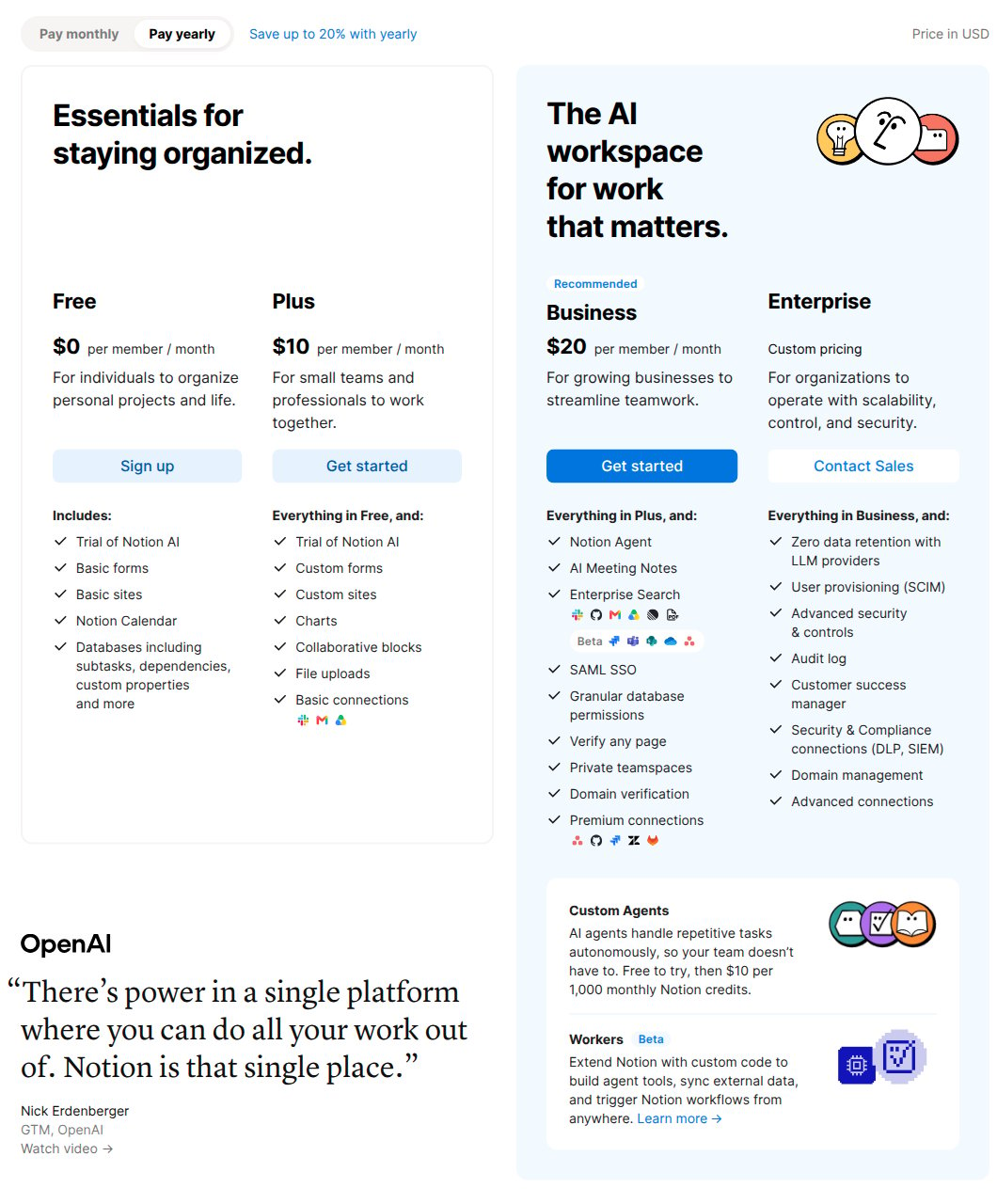
Notion's Free, Plus, Business and Enterprise plans with Pay yearly selected. Custom Agents and other tiers are outside the example. Captured November 18, 2026. Source: Notion's official pricing page, linked below.
Pricing profile
What Notion charges
Design takeaways
- Use a workspace as the billing boundary. The same person can be a member of two paid workspaces. A global distinct-user count would underbill; set separate line-item quantities. See the published terms.
- Derive quantity from billing roles. A page guest is not a member merely because they collaborate. Read the paid membership count, not the number of individuals who accessed a page. See the published terms.
- Do not use symmetrical proration by default. Notion documents different effects for additions and removals. Preserve that distinction if you implement the adjustment workflow separately. See the published terms.
How Notion’s pricing maps to Flexprice
Set up the fixed subscription
Use the Flexprice API only in your own test environment. Replace the illustrative IDs with the IDs returned by your setup. Create a plan withPOST /plans:
POST /prices. The amount is in USD, not cents, and is the unit amount for the entire billing period:
POST /subscriptions with that customer, the plan and its fixed price. The quantity override applies to the fixed line item.
Worked bill
$10 × 12 = $120 per member per year; 8 paid members × $120 = $960. The invoice base is $960 for quantity 8, before excluded charges or adjustments.Pricing sources
- Notion pricing: USD yearly plan comparison and Plus rate.
- Notion billing documentation: Workspace-specific billing, guest treatment and seat changes.