

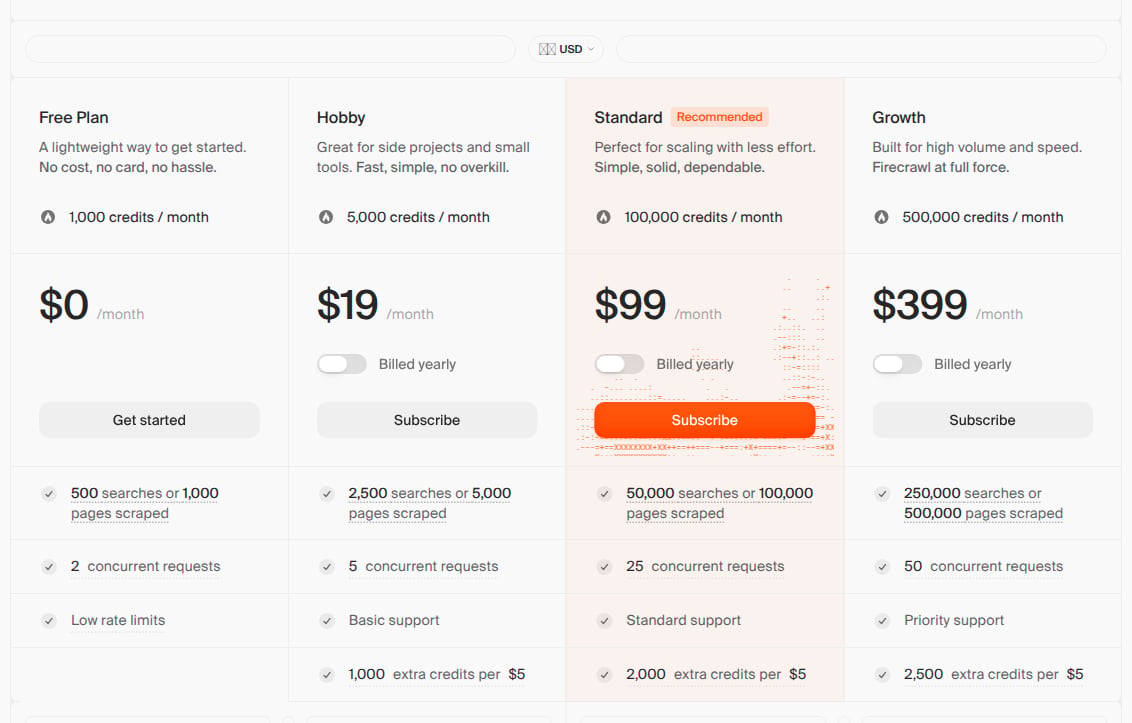
Firecrawl pricing as shown on the official pricing page, 2026-11-19.
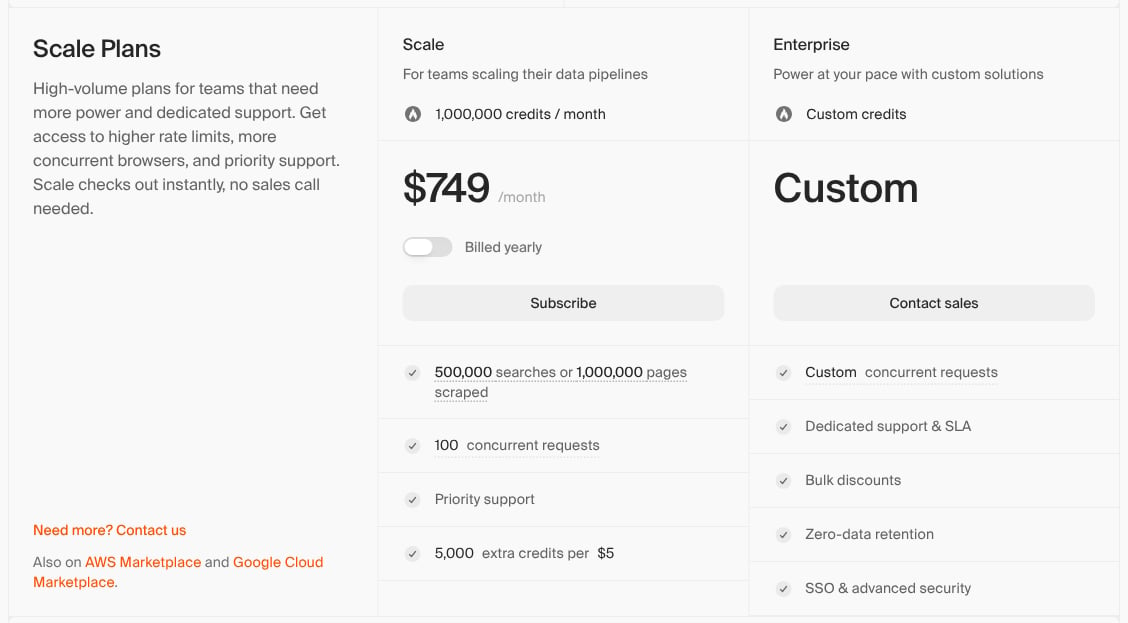
Firecrawl pricing as shown on the official pricing page, 2026-11-19.
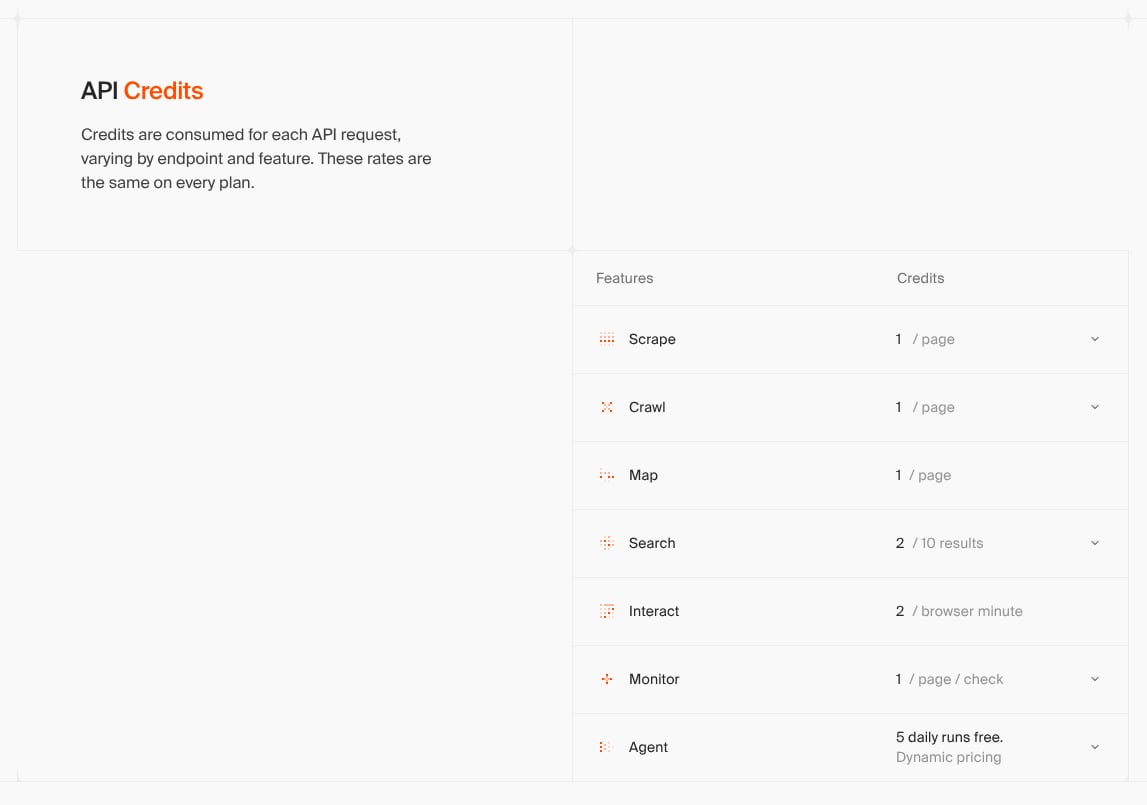
Firecrawl pricing as shown on the official pricing page, 2026-11-19.
Pricing profile
What Firecrawl charges
Design takeaways
- Track credits, not requests. An API call count cannot stand in for the published credit schedule. Record how many credits the operation consumed, so a later extension can account for endpoints or formats with different weights. Published terms.
- Keep permission and charging separate. The monthly fee buys an allowance. Running out with pay-as-you-go off is an access decision, not a reason to apply a per-page cash price. Published terms.
How Firecrawl’s pricing maps to Flexprice
Configure the plan and subscription
These requests are illustrative. Use your own test environment and replace all example IDs with the IDs returned by your setup. Create a plan withPOST /plans:
POST /prices. The amount covers the entire month and is in USD, not cents.
POST /features, then attach a quantity entitlement grant with POST /entitlements. Use the returned feature ID. A subscription_period grant uses the monthly subscription cycle automatically. Omit grant_duration_value and grant_allocation_behavior for this grant type. Neither the meter nor the grant creates a USD usage charge.
POST /subscriptions.
POST /events event per successful billable basic page, using the Flexprice customer’s external ID. Reuse the same event ID and timestamp on retry.
Worked bill
4,600 basic pages consume 4,600 credits, leaving 400 of the monthly 5,000. The bill remains $19.00. At 5,000 used, the application declines the next billable page under the modeled no-top-up configuration.Pricing sources
- Firecrawl pricing: Hobby monthly price, included credits, paid top-ups and rollover rules.
- Firecrawl product documentation: Basic scrape credit cost and extra-format charges.